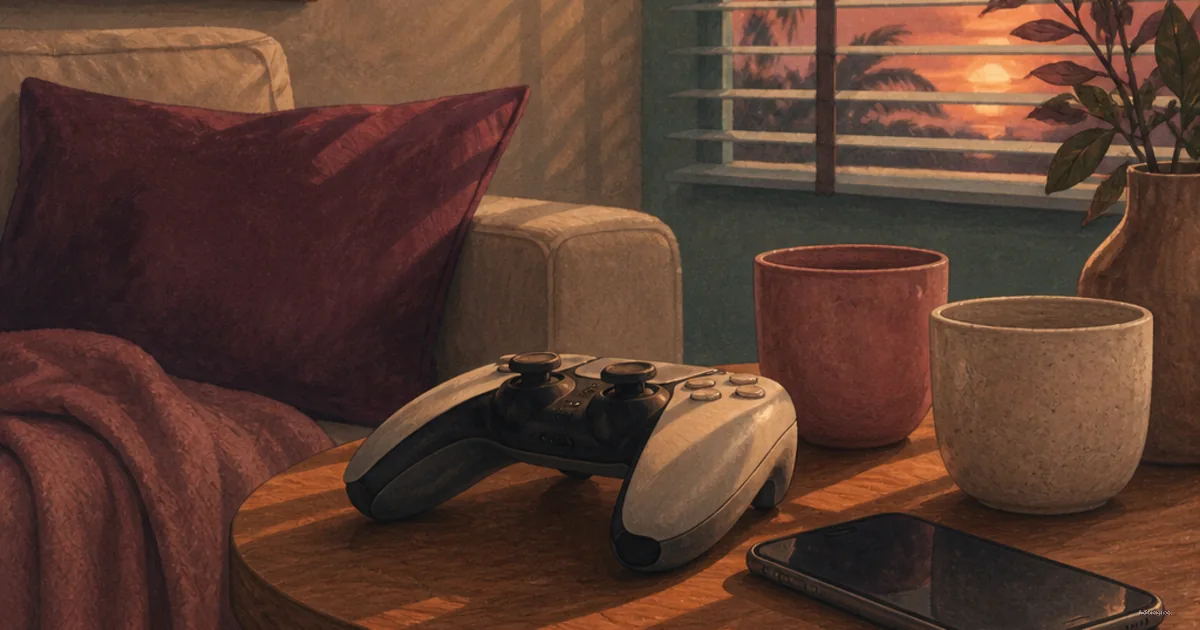
Playing GTA VI is not, by itself, a red flag. I look at how a person's choices around gaming affect the relationship. A game title does not tell me a partner's character. The more useful questions are what the hobby displaces, whether agreements are kept, and how both people handle an honest conversation.
What my own relationship taught me about keeping connection
In my seventeen-plus-year relationship, one line keeps returning to me:
“Don't lose the thrill.”
That line does not ask you to share every hobby or set your own aside. I mean that the connection deserves care alongside the interests each person brings into it. A game can be part of someone's life without becoming a verdict; the choices around shared time can show what needs attention.
Why is GTA VI being discussed in relationships?
Rockstar Newswire announced that Grand Theft Auto VI launched worldwide on November 19, 2026, for PlayStation 5 and Xbox Series X|S. A major release can give a couple a timely reason to talk about time, money, and shared plans. The launch date does not, by itself, create a relationship problem.
Before the November 19 launch, Unwind Media said it surveyed 1,519 Americans; 1,347 planned or wanted to buy GTA VI. Among fans in relationships, 21% said a partner had joked about losing them to the game, 17% said they had argued about play time, and 14% said they had argued about spending. Those responses describe people interested in the game, not every couple. The report page I reviewed does not state the survey field dates, subgroup count, or full sampling method. These answers do not show that GTA VI caused an argument or predict a breakup.
Some coverage framed the release as a warning about divorce. A Newsweek story cited the Unwind Media results, which measure reported jokes and disagreements, not divorces caused by the game. I take the concern seriously without treating a headline as a verdict about your relationship.
A separate September 1, 2026, YouGov question asked 4,114 U.S. adults whether it would be cheating if a partner played a video game that required their character to maintain a romantic relationship with another character. Six percent said it would be cheating, 19% said it would not be cheating but would not be okay with them, 54% said it would not be cheating and would be okay with them, and 21% were unsure or preferred not to say. The question was hypothetical and was not about GTA VI's specific mechanics. The responses show why I would not impose one universal rule on every couple.
A hobby, a priority, and character are different things
A hobby tells me that someone enjoys an activity. Playing a game, watching a sport, reading, or collecting something does not reveal a person's full character. I would not judge a partner by the title of a game.
Priorities show up in the pattern around the hobby. Is someone repeatedly missing plans they agreed to keep? Is gaming taking time from sleep, work, caregiving, shared responsibilities, or a budget the two of you agreed on? One long session on a free evening is different from a repeated pattern of broken agreements.
Character shows up in how someone treats people and responds when a concern is raised. I pay attention to honesty, consideration, follow-through, and whether both people can discuss a boundary without shame or pressure. A controller cannot tell me those things. Behavior over time can give me more information.
When can gaming become a relationship problem?
I would look more closely when gaming repeatedly displaces responsibilities, shared plans, agreed spending limits, or the time both people said they wanted to protect. A concern becomes clearer when the pattern continues after a direct conversation and one person is left carrying the consequences.
The response matters too. Can each person explain what they need and hear the other person? Can they make a specific agreement and follow through? If the conversation turns into monitoring, humiliation, threats, or control, the issue is bigger than a game. A hobby is not a reason to shame someone, and a request for shared time is not automatically an attempt to control them.
Three calm questions to ask about gaming and time
1. What time do we each want to protect for sleep, work, shared plans, and play?
2. Which responsibilities or spending limits do we need to keep, and how will we know the agreement is being kept?
3. If one of us feels sidelined, what specific change would help without shaming or controlling the other person?
What if gaming feels hard to stop?
The World Health Organization describes gaming disorder as a pattern involving impaired control, gaming taking priority over other activities, and continuing or increasing gaming despite negative consequences. A diagnosis requires significant impairment in important areas of life and would normally have been evident for at least 12 months. WHO says gaming disorder affects a small proportion of people who play.
Enjoying one game, spending many hours during a planned break, or having a disagreement about play time does not establish a disorder. I cannot diagnose a partner from a relationship article. If gaming is causing serious impairment, a qualified health professional can assess it. If you need help beyond this article, visit the Fix Love support resources.
Questions readers ask
Is playing GTA VI a red flag?
Not by itself. I look at whether gaming repeatedly displaces shared agreements and how each person responds to a respectful conversation.
Does a hobby tell you what kind of partner someone is?
A hobby shows one interest. Honesty, consideration, follow-through, and the wider pattern of behavior tell you more.
Is an in-game romance cheating?
There is no single answer that fits every couple. The useful step is to discuss what each person considers a boundary and whether the agreement is mutual.
Where to go next
I write about dating, boundaries, fear, and repair across Fix Love. If you want the story behind that work, read my Founder Story. You can browse more free articles in the Fix Love Newsroom or return to the Fix Love home page. The Fear of Modern Dating is included in the Fix Love five-book digital bundle. For related questions, read my article about a partner who is always on a phone, my article about a friend asking for partner-level attention, and my article about men stepping away from dating.
Sources
- Grand Theft Auto VI Now Available (Rockstar Newswire; accessed 2026-11-24). The official release notice states that Grand Theft Auto VI launched worldwide on November 19, 2026, for PlayStation 5 and Xbox Series X|S. Limitation: This release notice supports timing and platform context; it does not establish relationship effects or diagnoses.
- GTA VI survey findings and methodology (Unwind Media, published through Solitaire Bliss; accessed 2026-11-24). The report says 1,519 Americans were surveyed and 1,347 planned or wanted to buy GTA VI; among fans in relationships, it reports 21% partner jokes about losing them to the game, 17% arguments about play time, and 14% arguments about spending. Limitation: The page reviewed does not state survey field dates, the relationship subgroup count, or a complete sampling method. The findings concern people interested in GTA VI, rely on self-report, and do not establish causation or represent all couples.
- Divorce lawyers issue GTA 6 warning (Newsweek; accessed 2026-11-24). The November 18, 2026, article repeats the Unwind Media survey results and frames gaming time as a possible relationship concern. Limitation: The article does not establish that GTA VI causes divorce; no private couple details or quotations from this story are used.
- Daily question on a partner's video-game romance (YouGov U.S.; accessed 2026-11-24). The September 1, 2026, question was asked of 4,114 U.S. adults. Results were 6% cheating, 19% not cheating but not acceptable, 54% not cheating and acceptable, and 21% unsure or preferring not to say. Limitation: The question describes a hypothetical video-game romance, not GTA VI specifically or actual behavior within couples.
- Gaming disorder: Frequently Asked Questions (World Health Organization; accessed 2026-11-24). WHO describes impaired control, gaming taking priority over other activities, continuation despite negative consequences, significant functional impairment, a pattern normally evident for at least 12 months, and a small proportion of people who game being affected. Limitation: This public FAQ does not diagnose an individual. The article does not infer a disorder from hours played or a relationship disagreement.
Continue exploring: Fix Love home · Fix Love Newsroom · Intimate Corner · Explore all five books in the bundle · Free reflection tools
Continue with Boundaries Without Walls.