
If dating feels unfamiliar after a long break, you do not have to prove that you are fully confident before you begin. Start with a step you can choose freely, pay attention to how the other person treats you, and let each experience give you information. You can pause, continue, or change your mind.
The Institute for Family Studies reported in its February 2026 State of Our Unions dating report that 49% of respondents named lack of confidence as a dating barrier and 48% named bad past experiences. The survey included 5,275 unmarried U.S. adults ages 22 to 35. Those figures describe that group. They do not predict how a person of any age will feel when returning to dating. Read the report and its survey scope.
Decide what returning to dating means for you
A long break can follow a breakup, caregiving, work, health changes, a move, or simply a period when dating was not a priority. There is no single reason and no required timeline. Before making a profile or saying yes to a date, ask what you want right now. You may be open to meeting someone without knowing whether you want a long-term relationship. You may want a committed relationship but prefer to move slowly.
Being open to connection is different from accepting any connection. Missing companionship does not mean you need to ignore a mismatch. Feeling cautious does not mean you are incapable of choosing well. Give yourself permission to want something and to have limits at the same time.
Let confidence grow through manageable practice
People often talk as if confidence must come before action. In ordinary life, comfort can grow as you try things, notice what works, and adjust. You might begin by updating a profile, asking a friend to introduce you to someone, attending a social activity you would enjoy anyway, or having a short conversation before deciding about a date.
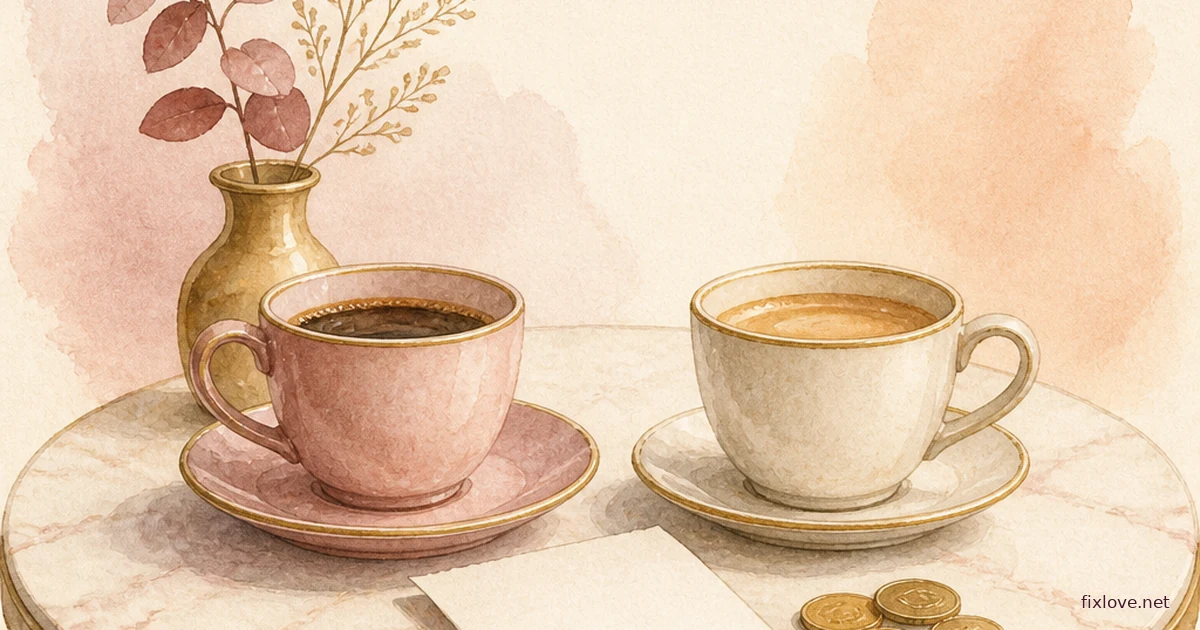
choose a public, low-pressure place to meet that leaves room to talk and fits your comfort and budget. A coffee, a daytime walk in a public place, or another simple plan can be enough to learn whether conversation feels mutual. You do not have to perform a perfect version of yourself or decide the future before you know the person.
Make the plan in a way that preserves your choice. Arrange your own way home, tell someone you trust where you will be if that feels helpful, and remember that you can end a date or decline another one. These are ordinary options, not signs that you expect the worst.
Notice how the connection feels, not just whether it continues
After an interaction, try asking what you learned instead of grading yourself. Did you feel listened to? Could you speak honestly? Did the other person respect a small boundary? Was there enough interest on both sides to want another conversation? A date that does not continue can still teach you something without becoming a verdict on your worth.
It may help to separate what happened from the story you attached to it. “We did not find much to talk about” describes one meeting. “Nobody will want me” reaches far beyond what that meeting can show. You can feel disappointed and still keep the evidence in proportion.
Keep care and self-respect together
Some people become so focused on avoiding another painful experience that every uncertain moment feels like a warning. Others want companionship so strongly that they overlook behavior that does not feel respectful. Both responses deserve attention, but neither is a fixed identity. Slow down when you need to. Ask a direct question when it is safe. Look for consistent behavior rather than demanding certainty from one promising conversation.
If dating brings up distress that feels hard to manage, a pause or support from a qualified professional may be useful. Fix Love offers general education, not individualized counseling. You do not have to date to prove that you have moved on, and you do not have to remain on a break to prove that you are protecting yourself.
The Fear of Modern Dating explores fear and protective habits, while CHALANT considers showing care without giving up your boundaries. Both titles are included in the Fix Love 5-Book Bundle. The guidance here is free to use whether or not you read a book.
Sources
- Institute for Family Studies, State of Our Unions 2026: The Dating Recession. The cited confidence and past-experience figures come from a 2025 survey of unmarried U.S. adults ages 22 to 35. They are not universal estimates.
Continue exploring: Fix Love home · Fix Love Newsroom · Intimate Corner · Explore all five books in the bundle · Free reflection tools
Continue with Fear of Rejection.